
INDIAN RAILWAYS HIKES PENALTY FOR TICKETLESS TRAVEL, NEW RULES COME INTO EFFECT
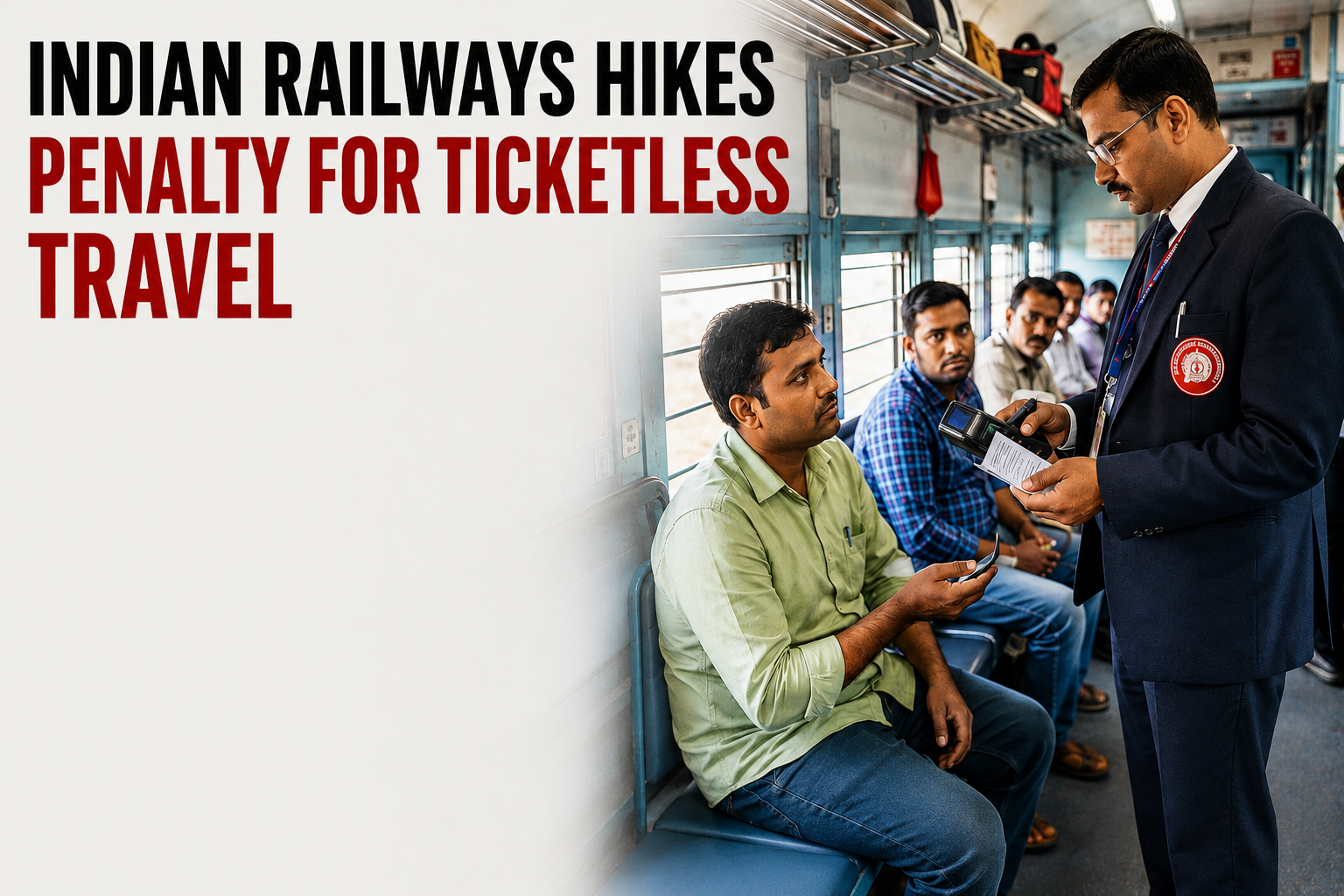
New Delhi, June 20: In a move aimed at curbing ticketless travel and improving compliance with railway regulations, Indian Railways has implemented revised penalty provisions that significantly increase fines for passengers travelling without valid tickets. The new rules came into effect on Friday and are expected to strengthen enforcement across the country's extensive rail network.
Under the amended provisions of the Railways Act, the minimum fine for travelling without a valid ticket has been doubled from ₹250 to ₹500. Railway authorities have stated that the revision is intended to discourage fare evasion and ensure that all passengers contribute fairly to the railway system.
Officials said the decision forms part of a broader initiative to improve discipline, enhance passenger services, and reduce revenue losses caused by unauthorized travel. The revised penalty structure applies not only to passengers travelling without tickets but also to those found using another person's ticket or travelling in a higher class without paying the required fare difference.
According to railway officials, ticket-checking teams conduct regular inspections across railway zones and frequently detect large numbers of passengers violating travel regulations. Such offences result in significant financial losses to the national transporter every year. Authorities believe that the increased fines will act as a stronger deterrent and encourage travellers to purchase valid tickets before boarding trains.
The Ministry of Railways has issued notifications and advisories to various railway zones, directing officials to spread awareness about the new regulations. Passengers have been urged to use authorized booking platforms, railway reservation counters, and digital ticketing services to obtain valid travel documents.
Railway authorities emphasized that individuals caught travelling without proper authorization may be required to pay the applicable fare in addition to the revised penalty. In certain cases, further legal action may also be initiated in accordance with railway laws.
Apart from ticketless travel, the government has also proposed stricter penalties for several other offences committed within railway premises and trains. These include unauthorized hawking, public nuisance, begging, abusive behaviour, and travelling while intoxicated. Officials believe stronger enforcement of such provisions will help create a safer, cleaner, and more comfortable environment for passengers.
The Indian Railways network carries millions of passengers every day, making it one of the busiest transportation systems in the world. Ensuring compliance with ticketing rules remains a key challenge for railway authorities, particularly on heavily crowded routes where ticketless travel has historically been a persistent issue.
Passenger associations have largely welcomed the move, stating that fare-paying travellers often face inconvenience due to overcrowding caused by unauthorized passengers. They believe stricter penalties could help improve travel conditions and ensure greater accountability among commuters.
Railway officials have appealed to passengers to cooperate with ticket-checking staff and follow all travel regulations. They reiterated that purchasing a valid ticket is not only a legal requirement but also a civic responsibility that contributes to the efficient functioning of the railway system.
With the revised penalties now in force, Indian Railways hopes to reduce fare evasion, improve revenue collection, and promote a culture of responsible and lawful travel across the country.
Powered by Froala Editor