
RBI Considers Introducing Polymer Currency Notes in India
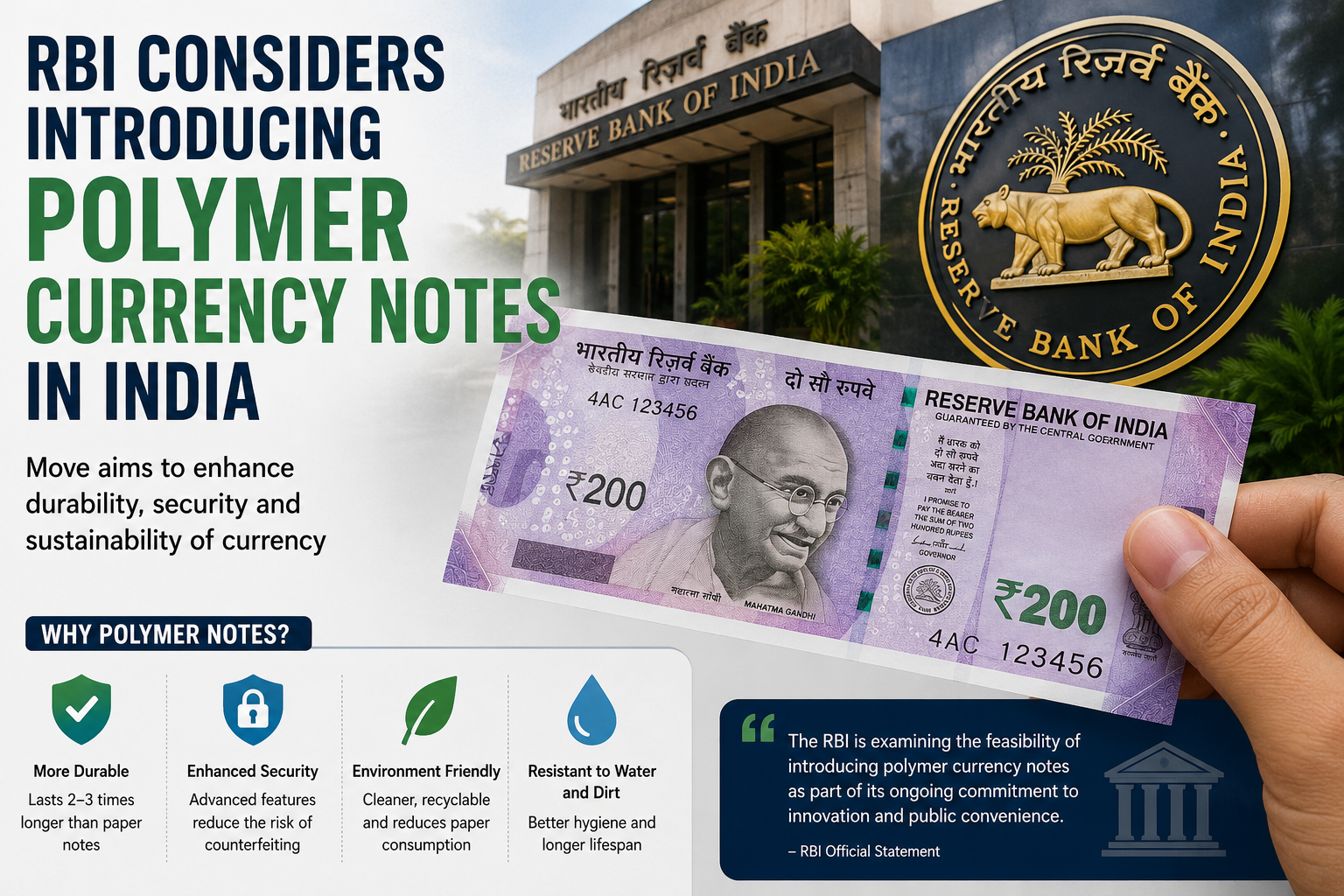
New Delhi : India may soon witness a significant change in its currency system as the Reserve Bank of India (RBI) evaluates the introduction of polymer banknotes, commonly known as plastic currency notes. The move is part of the central bank's ongoing efforts to improve the durability, security, and efficiency of circulating currency.
According to recent reports, the RBI has revived discussions on a proposal that was first explored more than a decade ago. The central bank is reportedly considering launching a pilot project involving lower-denomination notes, such as ₹10 and ₹20, before deciding on a broader rollout. While no formal announcement has been made regarding a nationwide replacement of paper notes, the initiative signals renewed interest in polymer-based currency.
Polymer banknotes are made from a thin plastic material rather than traditional cotton-based paper. Many countries, including Australia, Canada, and the United Kingdom, have adopted polymer notes because of their longer lifespan and enhanced resistance to wear and tear. These notes are also less susceptible to damage from moisture, dirt, and frequent handling.
Security is another key advantage. Polymer notes can incorporate advanced anti-counterfeiting features, including transparent windows, complex holograms, and specialized printing techniques that are difficult to replicate. As counterfeit prevention remains a priority for monetary authorities, such features could strengthen the integrity of India's currency system.
The renewed focus on polymer notes comes amid increasing demand for physical cash and rising costs associated with printing and replacing damaged currency. Traditional paper notes often deteriorate quickly in India's diverse climatic conditions, requiring regular replacement. Longer-lasting polymer notes could potentially reduce replacement frequency and lower long-term costs despite higher initial production expenses.
India had previously experimented with polymer currency in 2013 when trial batches of ₹10 notes were proposed for circulation in select locations. However, the project did not progress beyond the testing phase. The latest discussions suggest that policymakers are reassessing the technology in light of advancements in manufacturing and security features.
At the same time, the RBI continues to support the circulation of conventional currency. Recent initiatives include plans to introduce varnished banknotes designed to enhance durability and improve security characteristics. The central bank is also expanding pilot programs for the digital rupee, reflecting a broader strategy that combines physical and digital payment solutions.
Experts note that even if polymer notes are introduced, the transition would likely occur gradually and coexist with existing paper currency for an extended period. Any decision to expand polymer banknotes nationwide would depend on the results of pilot projects, cost assessments, and public acceptance.
For now, the proposal remains under consideration, but it represents a potential step toward modernizing India's currency infrastructure while addressing durability, security, and cost-related challenges.
Powered by Froala Editor