
₹1,200 Fine for 46 Paise Shortfall: Credit Card Charge Sparks Consumer Debate
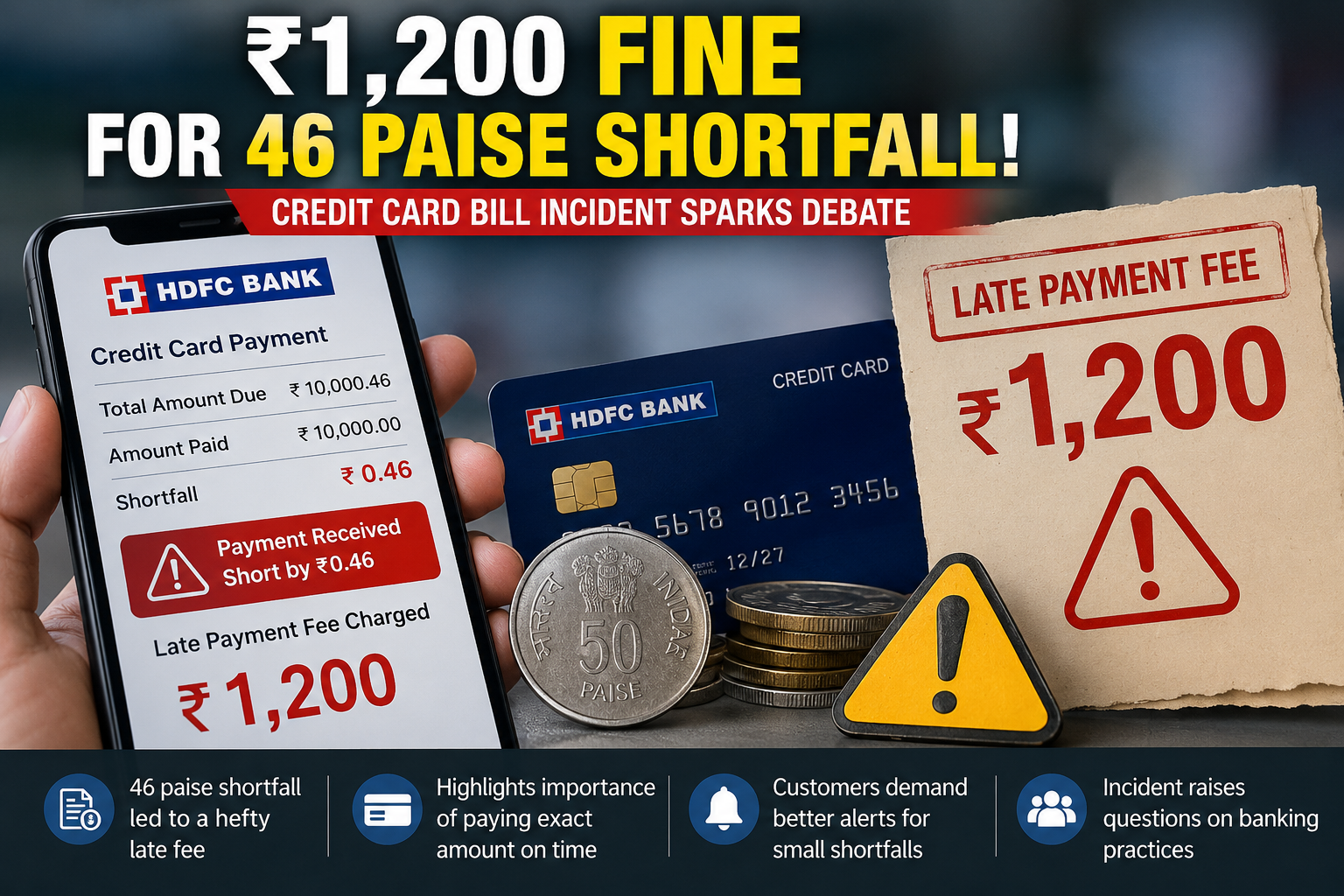
New Delhi: A credit-card payment incident involving a difference of just a few paise has sparked considerable discussion among consumers after a customer was reportedly charged a ₹1,200 late-payment fee for a shortfall of only 46 paise.
According to reports circulating online, the customer had paid the credit-card bill but the payment apparently fell short of the required amount by 46 paise. Despite the extremely small difference, a late-payment charge of ₹1,200 was reportedly imposed, raising questions about the way credit-card payment rules and penalty charges are applied.
The incident has drawn attention because of the significant difference between the unpaid amount and the fee reportedly charged. While financial institutions generally impose late-payment charges when customers fail to clear their dues within the specified deadline, the case has prompted consumers to question whether customers should receive an alert when a payment falls marginally short.
Credit-card bills usually contain a specific payment deadline and an outstanding amount that customers are expected to clear. If the entire amount is not received by the due date, the remaining balance may be treated as unpaid under the applicable terms and conditions. Depending on the card and the bank's fee structure, this can result in additional charges.
The reported incident also highlights the importance of checking payment confirmations after settling credit-card bills. Customers making payments through digital banking platforms or other online channels are advised to verify that the correct amount has been credited to their account.
Even a very small discrepancy can potentially leave an outstanding balance. In such circumstances, customers may only become aware of the shortfall after receiving their next statement or noticing additional charges on their account.
The case has also fuelled a broader conversation about transparency in banking charges. Consumers have increasingly called for clearer notifications when payments are marginally below the amount due. Such alerts could potentially help customers rectify minor discrepancies before they result in additional charges.
However, the exact circumstances surrounding the reported transaction, including the customer's card type, applicable fee structure and whether the bank later reversed or adjusted the charge, need to be verified through official records. Online reports alone may not provide the complete details of an individual banking transaction.
For credit-card users, the incident serves as a reminder to carefully examine monthly statements and payment receipts. Customers who notice unexpected fees can approach their bank's customer-service department and seek a detailed explanation. If they believe a charge has been incorrectly applied, they can also follow the bank's formal grievance-redressal procedure.
The reported ₹1,200 charge against a 46-paise shortfall has therefore become an example of how even a seemingly insignificant unpaid amount can attract attention when it is linked to a much larger financial charge. The episode underlines the need for consumers to understand their credit-card terms, payment deadlines and applicable late-payment rules.
As digital payments continue to become a routine part of everyday financial transactions, the incident is likely to keep the focus on greater clarity, timely alerts and consumer awareness in the credit-card sector.
Powered by Froala Editor