
PM Modi Flags Off India's First Hydrogen-Powered Train, Marking a New Era in Green Rail Transport
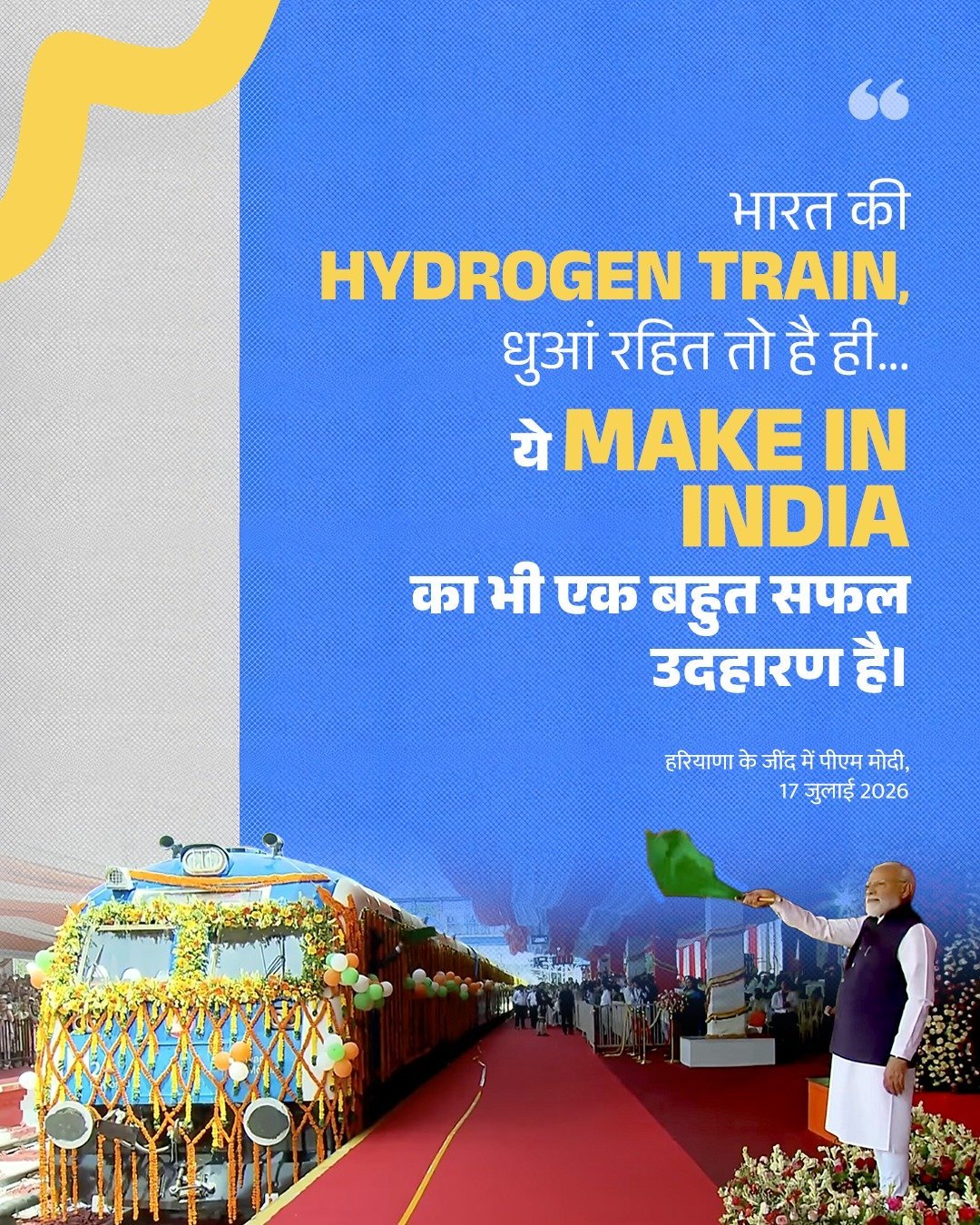
New Delhi, July 17: In a landmark step towards sustainable transportation and clean energy, Prime Minister Narendra Modi on Friday inaugurated India's first indigenous hydrogen-powered passenger train, marking a significant milestone in the country's railway modernization journey. The train was flagged off from Jind railway station in Haryana and will operate on the Jind–Sonipat route, making India one of the select nations in the world to introduce hydrogen-powered rail services.
The launch reflects the Indian government's growing emphasis on environmentally friendly technologies and its commitment to reducing carbon emissions through innovative transport solutions. The hydrogen-powered train is equipped with advanced fuel cell technology that generates electricity by combining hydrogen with oxygen. Unlike conventional diesel-powered trains, the only by-product of this process is water vapour, making the train a zero-emission mode of transportation and a major contributor to cleaner air.
Developed under the Government of India's flagship 'Make in India' initiative, the hydrogen train showcases the country's increasing capability to design and manufacture cutting-edge railway technology domestically. Indian Railways has also established the required hydrogen storage, refuelling, and maintenance infrastructure to ensure the smooth operation of the service.
The launch of the hydrogen-powered train is part of Indian Railways' broader strategy to adopt green technologies and reduce dependence on fossil fuels. The national transporter has been actively working towards achieving net-zero carbon emissions by introducing renewable energy projects, electrifying railway routes, and exploring alternative fuel options for trains operating on non-electrified tracks.
Addressing the gathering during the inauguration ceremony, Prime Minister Modi described the project as a historic achievement that demonstrates India's growing technological capabilities and its determination to lead the global transition towards sustainable mobility. He said the new train represents not only an engineering milestone but also a symbol of India's vision for a cleaner, greener, and more self-reliant future.
The Prime Minister also inaugurated and laid the foundation stone for multiple development projects worth around ₹14,700 crore in Haryana. These projects cover various sectors, including railways, road infrastructure, urban development, water supply, and public services. The government believes these initiatives will strengthen regional connectivity, improve public infrastructure, create employment opportunities, and accelerate economic growth across the state.
Railway officials noted that hydrogen-powered trains are particularly suitable for routes where complete electrification may not yet be feasible. By replacing diesel locomotives on such routes, Indian Railways expects to significantly reduce greenhouse gas emissions while lowering long-term operating costs. The technology is also expected to improve energy efficiency and contribute to India's broader climate commitments.
With the successful launch of the country's first hydrogen-powered passenger train, India has joined a small group of nations pioneering the use of hydrogen fuel in railway transportation. The initiative is expected to pave the way for wider adoption of clean-energy trains across the country's railway network in the coming years, reinforcing India's commitment to sustainable development, innovation, and environmentally responsible infrastructure.
Powered by Froala Editor