
Centre Eyes 15% Isobutanol Blend in Diesel After E20 Success
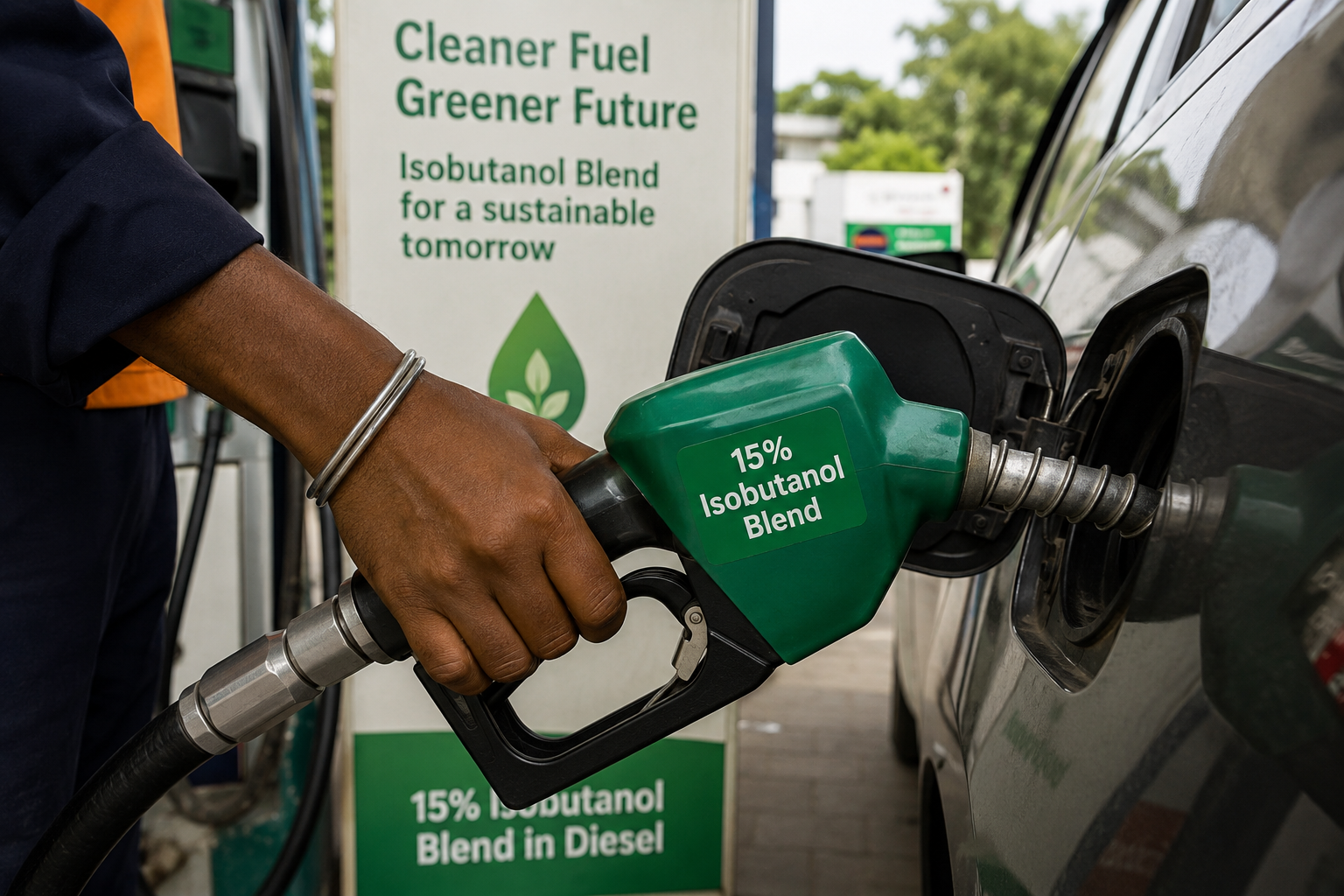
New Delhi: Riding on the success of the nationwide rollout of E20 petrol, the Central Government is now exploring another major step in its clean fuel strategy by considering the introduction of up to 15 per cent isobutanol blending in diesel. The move is aimed at reducing India's dependence on imported crude oil, cutting vehicular emissions, and expanding the use of domestically produced biofuels.
The proposal was outlined by Union Road Transport and Highways Minister Nitin Gadkari, who said the government is working on developing alternative fuels that can power diesel engines without compromising efficiency. According to the minister, ethanol, despite its widespread use in petrol blending, cannot be directly mixed with diesel because of technical and chemical limitations.
To address this challenge, the government is promoting the production of isobutanol from ethanol. Isobutanol is considered a next-generation biofuel with properties that make it more compatible with diesel engines than conventional ethanol. Gadkari said the Centre is examining the feasibility of permitting up to a 15 per cent isobutanol blend in diesel as part of India's long-term energy transition.
The minister also highlighted successful pilot demonstrations involving engines powered by ethanol and isobutanol. He noted that two generator sets have already operated on 100 per cent ethanol and isobutanol, indicating that the technology has shown encouraging results. These demonstrations, he said, reinforce the potential of biofuels to serve as viable alternatives to conventional fossil fuels in the future.
Experts believe isobutanol offers several advantages over traditional biofuels. It has a higher energy density, improved combustion characteristics, and better compatibility with existing diesel engines. These qualities may help improve engine performance while reducing harmful emissions. Wider adoption of isobutanol could also contribute to lower fuel imports, strengthen India's energy security, and create additional demand for agricultural produce used in biofuel production.
The latest proposal comes after the successful implementation of the E20 petrol programme across the country. India achieved its target of 20 per cent ethanol blending in petrol ahead of schedule, marking a significant milestone in the National Biofuel Policy. Government officials have stated that the programme has played an important role in reducing crude oil imports, lowering greenhouse gas emissions, and generating additional income opportunities for farmers through increased demand for ethanol feedstock.
The Centre has also defended the E20 initiative against concerns regarding vehicle compatibility and fuel efficiency. Authorities maintain that the programme is backed by extensive scientific research, regulatory approvals, and comprehensive testing conducted by automobile manufacturers and fuel agencies.
According to official estimates, the ethanol blending programme has helped India save substantial foreign exchange by reducing crude oil imports while supporting environmental sustainability. Encouraged by these outcomes, policymakers are now looking at expanding the country's biofuel portfolio through advanced alternatives such as isobutanol.
While no official timeline has been announced for introducing diesel blended with isobutanol, the proposal signals the government's continued commitment to cleaner transportation fuels and greater energy self-reliance. If approved after the necessary technical evaluations and regulatory clearances, the initiative could become another landmark step in India's transition towards sustainable mobility and a greener economy.
Powered by Froala Editor