

Cyberattack on Supermarket Refrigerators Spreads Across Nine European Countries, Thousands of Food Items Spoiled
November 3, 2026 | International News Desk
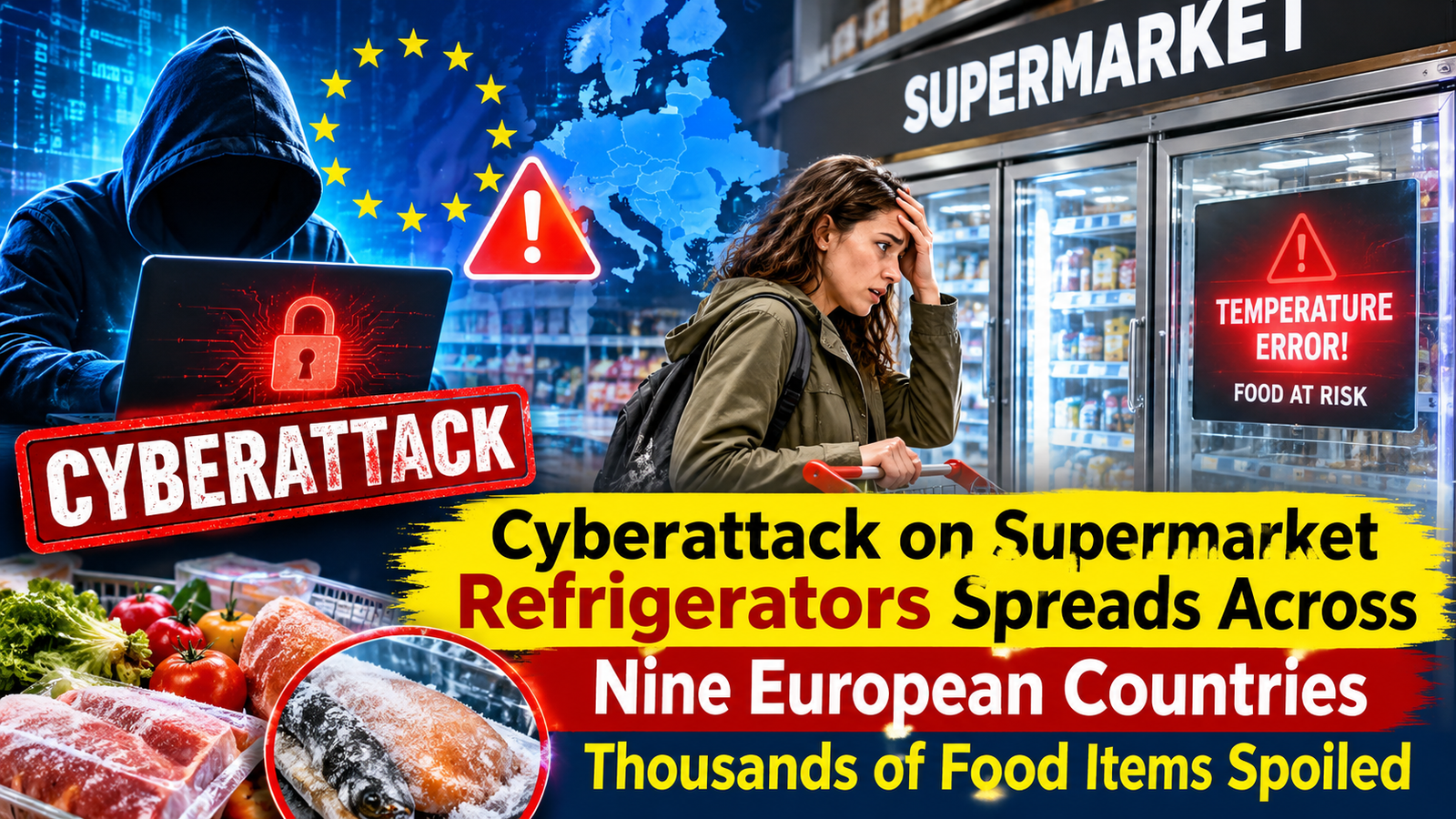
A series of cyberattacks targeting supermarket refrigeration systems has triggered alarm across Europe, with retailers in nine countries reporting disruptions that have resulted in substantial food losses. Hackers allegedly gained unauthorised access to internet-connected refrigerators and freezers, remotely manipulating temperature settings and causing stored food products to spoil.
The incidents have been reported in Belgium, Sweden, Luxembourg, Ireland, Estonia, Finland, the Netherlands, Portugal and Italy. Supermarket operators have been forced to remove chilled and frozen products from their shelves as a precautionary measure to protect consumers.
The attacks have exposed the growing cybersecurity risks associated with modern retail infrastructure, particularly systems that depend on internet connectivity for remote monitoring and temperature management.
In Belgium, several major supermarket chains, including Carrefour, Delhaize, Colruyt and Intermarché, reported problems with their refrigeration equipment. Carrefour confirmed that around 15 of its 700 Belgian outlets were affected, while Colruyt reported incidents at five stores.
Sweden also witnessed disruptions involving major supermarket operators Coop and ICA. At some locations, employees discovered that freezer temperatures had increased dramatically overnight, with reports of temperatures reaching approximately 50 degrees Celsius. The incidents resulted in significant losses of frozen food products.
In Ireland, Musgrave Group confirmed that refrigeration systems in 13 SuperValu stores had been affected. The company subsequently removed certain chilled and frozen products from sale as a precaution.
The financial impact has been considerable for supermarket operators and smaller businesses. In Belgium, a butcher in Hove, near Antwerp, reportedly suffered losses estimated at €15,000 after temperatures inside refrigeration equipment rose to approximately 18 degrees Celsius, damaging meat products.
The latest incidents have raised concerns because they follow an earlier cyberattack in France on October 12. That incident reportedly affected between 500 and 700 supermarkets, resulting in widespread refrigeration failures and substantial food wastage.
Investigators suspect that hackers exploited security weaknesses in remotely accessible refrigeration controllers. Modern supermarkets increasingly use connected systems to monitor cooling equipment and manage temperatures across multiple outlets. However, inadequate cybersecurity protection can make these systems vulnerable to unauthorised access.
Experts have identified outdated software, weak passwords and insufficient network protection as possible security weaknesses that could allow attackers to manipulate refrigeration settings.
However, authorities have not yet identified those responsible for the attacks. No hacking group has publicly claimed responsibility, and investigators are examining whether the incidents across different European countries are connected.
Cybersecurity specialists have urged retailers to strengthen their digital infrastructure, regularly update software, restrict remote access and introduce stronger authentication systems.
The incidents serve as a warning that cyberattacks are no longer limited to banks, government networks or personal computers. Critical everyday infrastructure, including supermarket refrigeration systems, can also become a target.
As investigations continue, European retailers face the challenge of protecting both their digital networks and the food supply chains that millions of consumers depend on every day.
Powered by Froala Editor