
Jantar Mantar Loses Designated Protest Site Status; Delhi Police Names Three Alternative Venues
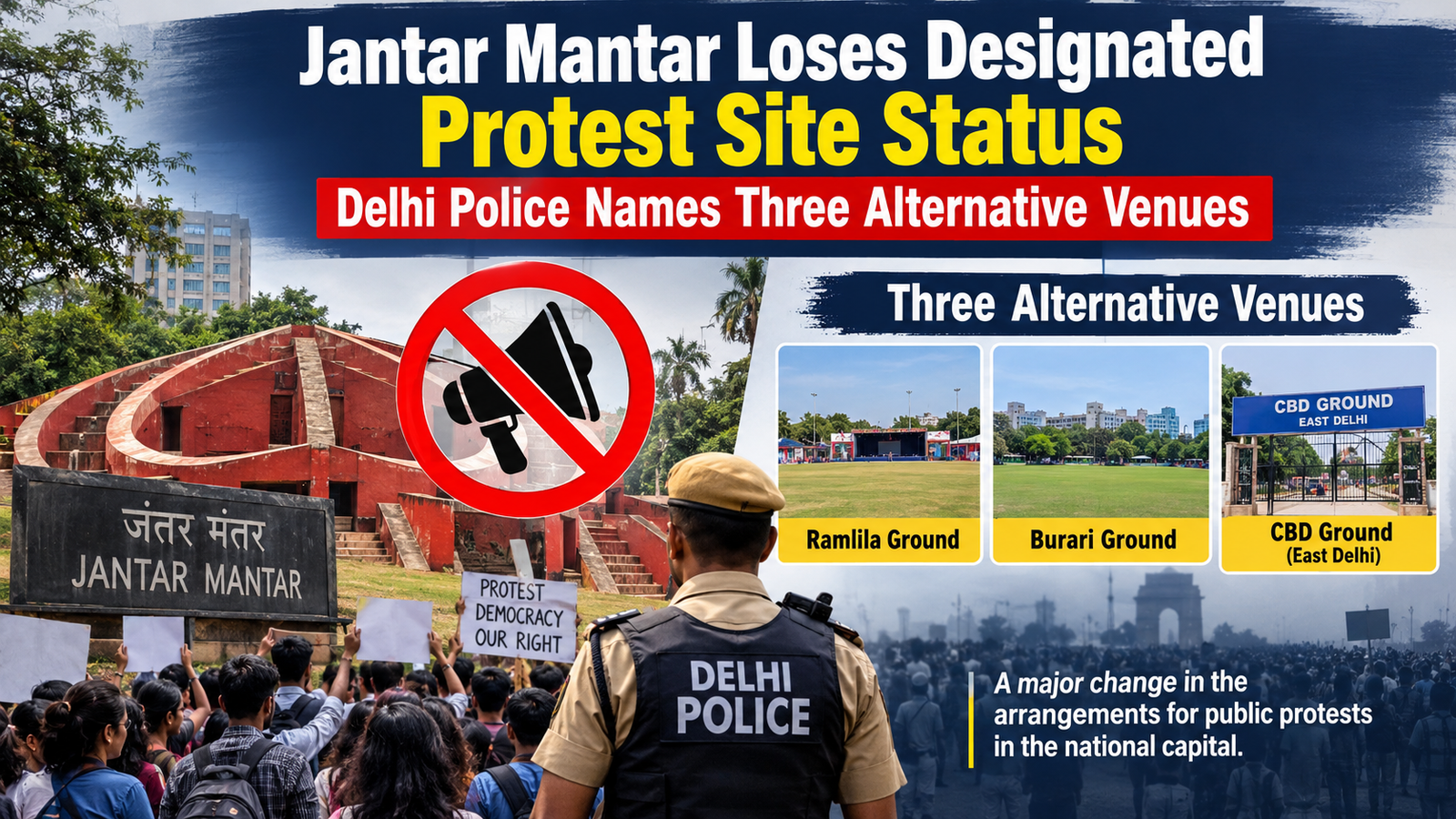
New Delhi: Jantar Mantar, one of India's most prominent locations for public demonstrations and political agitations, has been removed from the list of designated protest sites in the national capital, according to media reports. Delhi Police has identified three alternative venues for organising demonstrations, marking a significant change in the arrangements for public protests in the city.
The newly designated venues are Ramlila Ground, Burari Ground and CBD Ground in East Delhi. The decision follows a review of existing arrangements for public gatherings and demonstrations. According to reports, Delhi Police Commissioner Anurag Kumar issued the order outlining the revised arrangements.
The move is expected to affect political parties, social organisations, student groups, workers' associations and civil society bodies that have traditionally chosen Jantar Mantar to raise public concerns and demand action from the government.
Three Alternative Locations Identified
The decision to designate alternative protest venues follows an administrative review of suitable locations for demonstrations in Delhi. The Ministry of Home Affairs had constituted a committee to examine alternative sites where citizens could exercise their right to organise peaceful protests and demonstrations.
The three selected locations are expected to accommodate public gatherings under the applicable rules and permission procedures. However, organisers will need to follow the revised guidelines and coordinate with the police before holding demonstrations.
Delhi Police is also expected to issue a detailed Standard Operating Procedure (SOP) explaining the arrangements and conditions governing protests at the newly designated locations. The latest order reportedly modifies an earlier standing order issued in April 2022.
Jantar Mantar's Historic Role
For decades, Jantar Mantar has remained a recognised centre of public dissent in India. Located in central Delhi, the site has witnessed numerous demonstrations involving political parties, farmers, students, workers and social activists.
The venue gained national prominence during Anna Hazare's anti-corruption movement in 2011. It subsequently hosted several demonstrations concerning farmers' demands, government policies, employment issues and other matters of public interest.
In 2023, protesting wrestlers also used Jantar Mantar to demand action against Wrestling Federation of India chief Brij Bhushan Sharan Singh. The demonstrations attracted widespread attention and renewed public discussion about accountability and the rights of athletes.
Its location near important government institutions made Jantar Mantar a convenient place for protestors seeking to communicate their demands to political leaders and policymakers.
Concerns Over Freedom of Expression
The reported decision has triggered concerns among groups that view Jantar Mantar as an important democratic space. Critics argue that changing the designated venue could create practical difficulties for organisations that rely on public demonstrations to highlight grievances and attract media attention.
The Cockroach Janta Party (CJP) has reportedly criticised the move, describing it as a setback for the right to peaceful protest and raising questions about consultation with affected organisations.
At the same time, the revised arrangements have been presented as part of an administrative process to identify alternative locations for demonstrations and manage public gatherings.
Focus on Implementation
The impact of the decision will depend on how the new arrangements are implemented, including the permission process, accessibility of the alternative venues and facilities available to demonstrators.
Although Jantar Mantar's removal from the designated list changes the official arrangements for protests, the broader constitutional right to peaceful assembly remains an important consideration.
The coming days are likely to bring greater clarity on the revised guidelines and the procedures protest organisers must follow. The central challenge will be to balance public order and security requirements with citizens' ability to express their views and raise legitimate concerns through peaceful demonstrations.
Powered by Froala Editor