
SC Quashes FIRs Against NEET Paper-Leak Protesters Across India
New Delhi | September 1, 2026
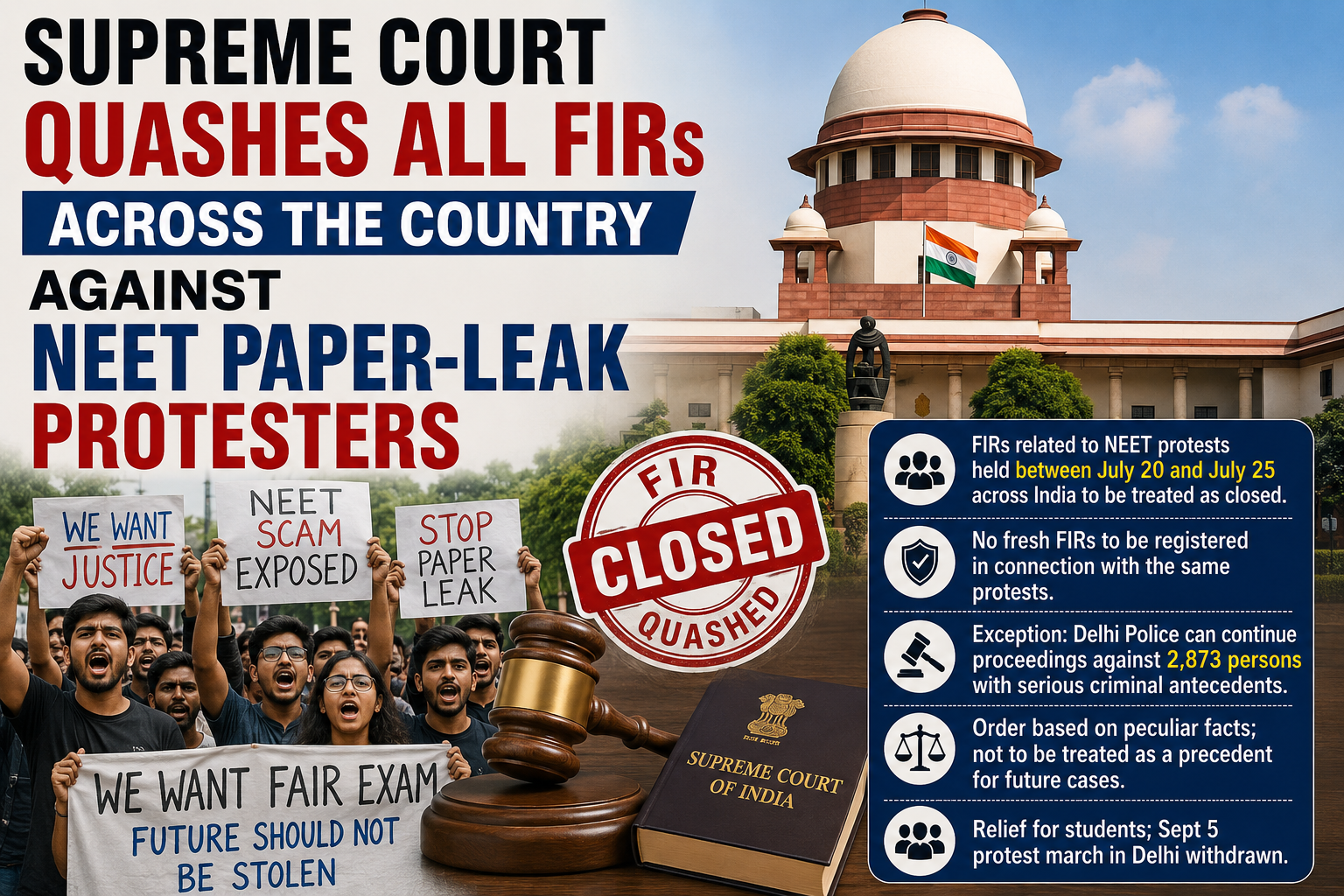
The Supreme Court has ordered the closure of First Information Reports (FIRs) registered across the country against protesters who took part in demonstrations over the alleged NEET paper-leak controversy. The court invoked its extraordinary powers under Article 142 of the Constitution, providing major relief to students and other protesters facing criminal cases linked to the agitation.
A three-judge bench headed by Chief Justice of India Surya Kant considered pleas seeking the withdrawal of criminal cases registered in connection with protests held over the NEET examination controversy. The demonstrations were organised in different parts of the country as students demanded transparency, accountability and action over allegations surrounding the examination.
The protests covered by the order were held between July 20 and July 25. Among them was a demonstration at Delhi’s Jantar Mantar, where a large number of students and supporters had gathered to raise concerns about the alleged irregularities in the examination process.
The Supreme Court directed that FIRs relating to the specified protest incidents should not be investigated or pursued further and would be treated as closed. The order also directed that fresh FIRs should not be registered in connection with the same protest incidents during the specified period.
The Centre had supported the move to withdraw the cases, while Delhi Police and governments of several states also backed the request. During the proceedings, assurances were given that students would not be unnecessarily targeted or subjected to harassment because of their participation in the demonstrations.
However, the Supreme Court's order contains an important exception. Delhi Police has been permitted to continue proceedings against 2,873 individuals identified as having serious criminal antecedents. The court made it clear that people with records involving grave or heinous offences would not automatically receive the benefit of the relief granted to other protesters.
The bench also clarified that its decision was based on the particular facts and circumstances of the case. The order, therefore, should not be interpreted as establishing a general legal principle that FIRs registered during protests must always be quashed.
The ruling is being viewed as significant relief for students who faced criminal proceedings following their participation in the NEET-related demonstrations. For many young protesters, the closure of the cases removes the possibility of prolonged legal proceedings arising from their participation in the agitation.
The development also highlights the delicate balance between the right to protest and the responsibility of authorities to maintain public order. While peaceful participation in democratic demonstrations is protected, the court has simultaneously preserved the possibility of legal action against individuals with serious criminal backgrounds.
Following the Supreme Court's decision, organisers also withdrew a proposed protest march scheduled to be held in Delhi on September 5.
The ruling comes amid continuing public and legal scrutiny of the NEET examination controversy. The Supreme Court's intervention has now brought substantial relief to protesters covered by the order, while retaining legal scrutiny for those facing allegations or records involving serious criminal offences.
The decision is expected to provide students affected by the FIRs an opportunity to move forward without the burden of cases arising from their participation in the specified NEET protests.
Powered by Froala Editor