

Passport, Aadhaar Clarifications Spark Fresh Citizenship Debate Across India
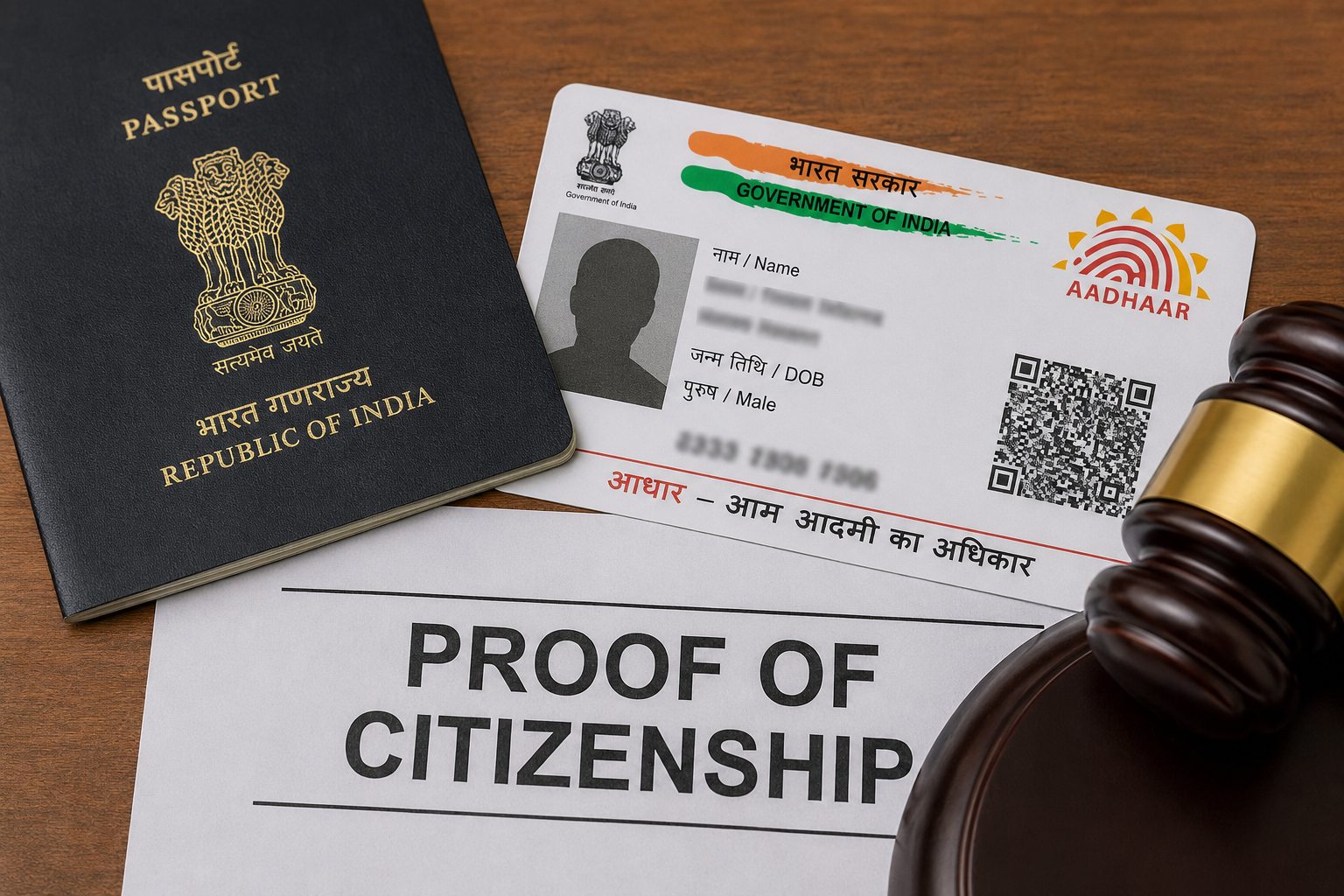
New Delhi, June 25: A renewed debate over citizenship documentation has emerged across India following recent legal and government clarifications regarding the status of commonly used identity documents such as passports and Aadhaar cards. The developments have generated widespread public discussion, with many citizens seeking clarity on which documents can legally establish Indian citizenship.
The controversy gained momentum after the Ministry of External Affairs clarified that an Indian passport, while an important travel document issued by the government, should not be viewed as conclusive proof of citizenship in every legal circumstance. Officials emphasized that the position is rooted in existing laws and judicial interpretations and does not represent a change in government policy.
The clarification surprised many people, as passports have traditionally been perceived as one of the strongest forms of identification available to Indian citizens. However, legal experts pointed out that passports primarily serve as travel and identity documents, while citizenship status may require verification through other legal records and supporting documents.
Attention soon shifted to Aadhaar cards, which have become an integral part of daily life in India. Aadhaar is widely used for accessing government welfare schemes, opening bank accounts, obtaining mobile connections, and verifying identity for numerous services. Despite its widespread acceptance, legal provisions under the Aadhaar Act clearly state that the document is intended only as proof of identity and residence and cannot be treated as evidence of citizenship.
The issue has received additional attention following recent court proceedings examining the scope of Aadhaar’s use. Petitions before the courts have argued that Aadhaar should not be relied upon as proof of citizenship, domicile, or date of birth. Judicial observations in these matters have reignited public discussions regarding the distinction between identity documents and citizenship records.
The debate has led to considerable confusion among citizens. Many people have questioned which documents can be used to establish citizenship if passports, Aadhaar cards, and certain other commonly held records are not considered definitive proof. Social media platforms have witnessed intense discussions, with users expressing concerns about future verification procedures and administrative requirements.
Political reactions have further amplified the issue. Opposition leaders have accused the government of creating uncertainty among ordinary citizens by highlighting the limitations of widely accepted documents. They have argued that the absence of a universally recognized citizenship document could lead to confusion and inconvenience for the public.
Government officials and legal experts, however, have stressed that citizenship in India is determined under the provisions of the Citizenship Act. According to the law, citizenship may be acquired through birth, descent, registration, or naturalization. Authorities generally assess a combination of documents and records when citizenship needs to be established, rather than relying on a single document.
Experts also note that the current debate does not affect the validity of passports or Aadhaar cards for their intended purposes. Passports continue to be valid travel documents, while Aadhaar remains an important identity verification tool for accessing public and private services.
As discussions continue in legal and political circles, many citizens are awaiting further clarification from the government. The issue has highlighted the need for greater public awareness about the distinction between identity documents and legal proof of citizenship. For now, authorities maintain that existing laws and procedures governing citizenship remain unchanged, even as the debate continues to attract national attention.
Powered by Froala Editor