

Government of Odisha’s Ama Kalika Programme Marks Three Years of Early Childhood Care in Mining-Affected Communities of Keonjhar
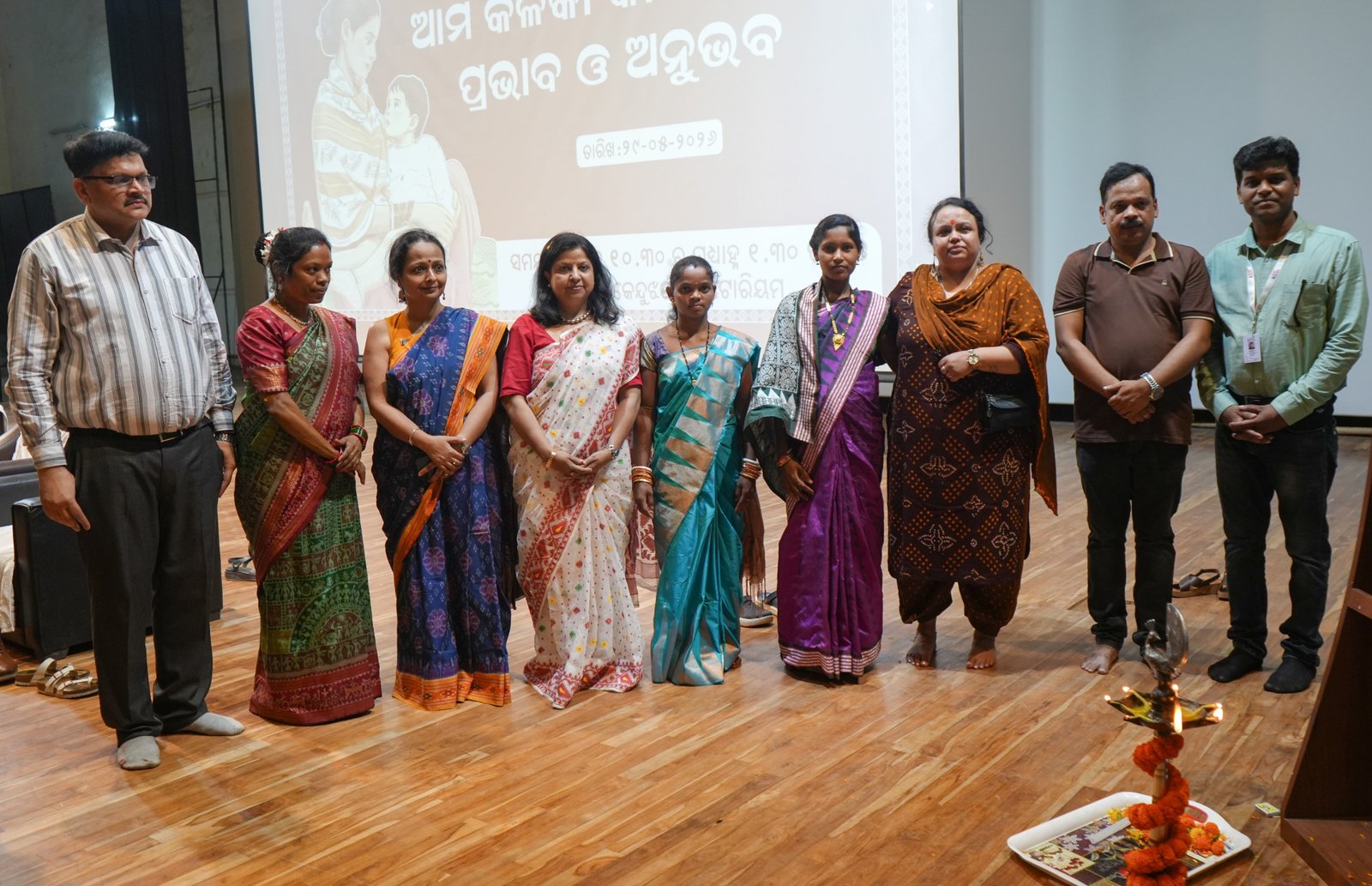
Keonjhar, Odisha | 29 May 2026 — The Government of Odisha’s Ama Kalika programme, implemented with technical support from Mobile Creches and supported through District Mineral Foundation (DMF) funding, marked three years of implementation in Banspal Block, Keonjhar district, at an event held on 29 May 2026 at the SAIL Auditorium, Keonjhar.
The event brought together over 300 participants, including Panchayati Raj Institution members, ICDS functionaries, creche workers, caregivers, and community representatives.
Launched in November 2022 in collaboration with the District Administration of Keonjhar, the Ama Kalika programme expanded to 150 creches across Banspal Block over three years, creating safe and nurturing spaces for children from mining-affected communities.
The programme addresses a critical gap in childcare support in labour-intensive communities where parents — especially mothers — often work long hours in and around mining operations. Beyond supporting children’s nutrition, safety, and early learning, the programme has also enabled women to participate in work with greater security and reduced caregiving burden.
A central feature of the event was the dissemination of an independent impact assessment study evaluating three years of implementation across Banspal Block.
*Key Findings from the Independent Impact Assessment*
The study highlighted the transformative role of structured childcare in mining-affected communities and revealed several important findings:
• *16%–22% of mothers relied on older siblings — mostly daughters — for childcare before* creche enrolment. Following enrolment, *56.6% of families reported improved school attendance among these older siblings,* highlighting the hidden educational burden placed on girls in the absence of childcare support.
• *22.6% of mothers reported taking infants and young children to forests, worksites, or labour sites* because no alternative care arrangements existed.
• The study documented early substitute feeding practices linked to work pressures, with the *average age of introducing solid or substitute food recorded at 4.3 months,* earlier than recommended infant feeding guidelines.
• *90.5% of mothers reported feeling less burdened after enrolment in creches,* while average daily rest time for mothers increased from *1.6 hours to 2.9 hours.*
• A Qualitative Comparative Analysis (QCA) of sampled creches found that *safe childcare spaces and reliable food/water availability* were the two factors most consistently associated with positive child outcomes.
The study also highlighted the continuing challenge of gendered caregiving norms, noting that father involvement in childcare did not increase significantly during the intervention period.
Speaking at the event, Chirashree Ghosh, Executive Director of Mobile Creches, said:
“The impact study shared today is not only a record of implementation — it is evidence of why childcare must become central to conversations on development, women’s work, and community wellbeing in mining-affected regions.”
The voices from the community echoed this sentiment. Ranjit Kumar Dehury, Sarpanch of Saharpur Gram Panchayat, Banspal Block, said:
"A creche is not just for the child — it belongs to the entire family and community. Childcare is not the responsibility of parents alone; it is all of ours. When the whole community stands behind the creche, it only grows stronger. That is why I make it a point to visit the creches in my Gram Panchayat every week."
For the mothers whose lives have changed most directly, the impact is deeply personal. Golapi Naik, a mother from Amuni Village, Rayagoda GP, shared:
"I am proud that our village has a creche run by Mobile Creches. It is not just about feeding children — it is about their mental and physical development too. While my child is at the creche, I am able to earn more for my family. And my child is happier there. Thank you, Mobile Creches, for bringing the creche to our village."
The event also recognised the contribution of creche workers — predominantly women from within the communities they serve — for supporting nutrition, child development, health monitoring, and early learning across Banspal Block.
Research shows that nearly 90% of brain development happens before the age of five. In mining-affected districts such as Keonjhar, where families face economic precarity, migration, and limited caregiving support, access to structured childcare can play a critical role in improving child wellbeing and strengthening community resilience.
The Ama Kalika programme now stands as an important example of how DMF investments can support early childhood care as essential social infrastructure in mining-affected regions.
About Mobile Creches
Since 1969, Mobile Creches has worked to ensure nurturing care for young children from vulnerable communities through safe childcare spaces, community engagement, and partnerships with governments and civil society organisations across India.
For further information, contact:
Mohd Zaid
Manager – Communications
Mobile Creches
???? zaid.m@mobilecreches.org
???? +91-8285526787
Powered by Froala Editor