
New Caller ID Rule From November 1: Mobile Users to See Names of Unknown Callers
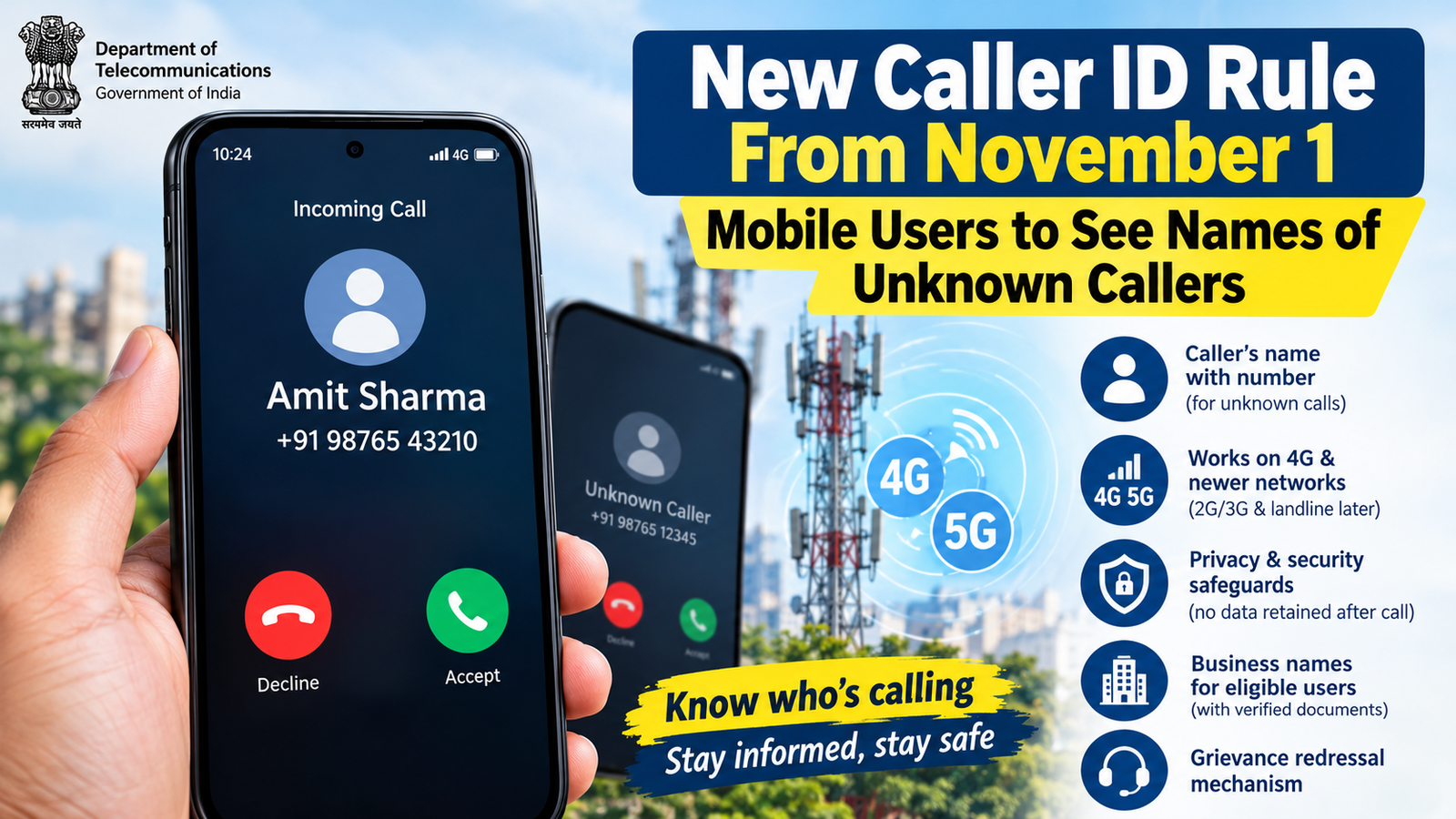
New Delhi, October 15: Mobile phone users across India may soon find it easier to identify unknown callers as the Department of Telecommunications (DoT) prepares to introduce a new caller identification system from November 1, 2026. Under the proposed arrangement, the name associated with a caller’s registered mobile connection will appear alongside the phone number on the recipient’s screen.
The facility, known as Calling Name Presentation (CNAP), is intended to improve caller identification and strengthen transparency in mobile communications. The government has directed telecom service providers to implement the service across their respective service areas, allowing users to identify callers without depending entirely on third-party applications.
According to reports, the new facility will be enabled by default, meaning subscribers will not need to submit a separate request to activate it. The service will initially cover 4G and newer mobile networks, including 5G connections.
How the New Caller ID System Will Work
Under the CNAP framework, the caller’s name will be displayed using information available in the subscriber database maintained by the telecom operator. When a call arrives from a number that is not saved in the recipient’s contact list, the registered subscriber name may appear alongside the incoming number.
For contacts already saved on a mobile phone, the name stored in the user’s personal address book will generally continue to appear on the screen.
The system is expected to provide an additional way of identifying unknown callers, particularly for people who frequently receive calls from unfamiliar numbers. International incoming calls will be identified separately with the words “International Call”.
The initial rollout will focus on wireless networks using 4G and newer technologies. Implementation for older 2G and 3G networks and landline connections will be considered separately.
Focus on Security and Transparency
The introduction of CNAP is intended to help mobile users make more informed decisions before answering calls. Displaying a registered name could make it easier to distinguish familiar callers from unfamiliar numbers and reduce reliance on external caller identification services.
However, officials and users will need to recognise that displaying a name does not automatically establish the authenticity of a call. Fraudsters may still attempt impersonation and other forms of telephone-based scams. Users should therefore avoid sharing banking details, passwords, one-time passwords (OTPs) or other sensitive information over suspicious calls.
Privacy Safeguards for Subscribers
Privacy protection is another important aspect of the proposed framework. Telecom operators are expected to implement appropriate technical and organisational safeguards while handling subscriber information.
Users who have activated Calling Line Identification Restriction (CLIR), a facility designed to prevent their caller identity from being displayed, will be exempt from name presentation under the system.
Special provisions may also allow eligible business subscribers with bulk connections to display verified business names. Such names will be subject to verification using acceptable documentation, including registered trademarks or trade names recorded on the Goods and Services Tax portal.
Telecom operators will also be required to provide a grievance redressal mechanism for complaints concerning the service.
The proposed November rollout represents a significant development in India’s mobile communication system. Its success will depend on accurate subscriber records, effective implementation and strong privacy safeguards. While CNAP could make unknown calls easier to identify, users will still need to remain alert to possible telephone fraud.
*AI generated
Powered by Froala Editor