
India Achieves Target of 11 Crore Digital Farmer IDs Ahead of Deadline
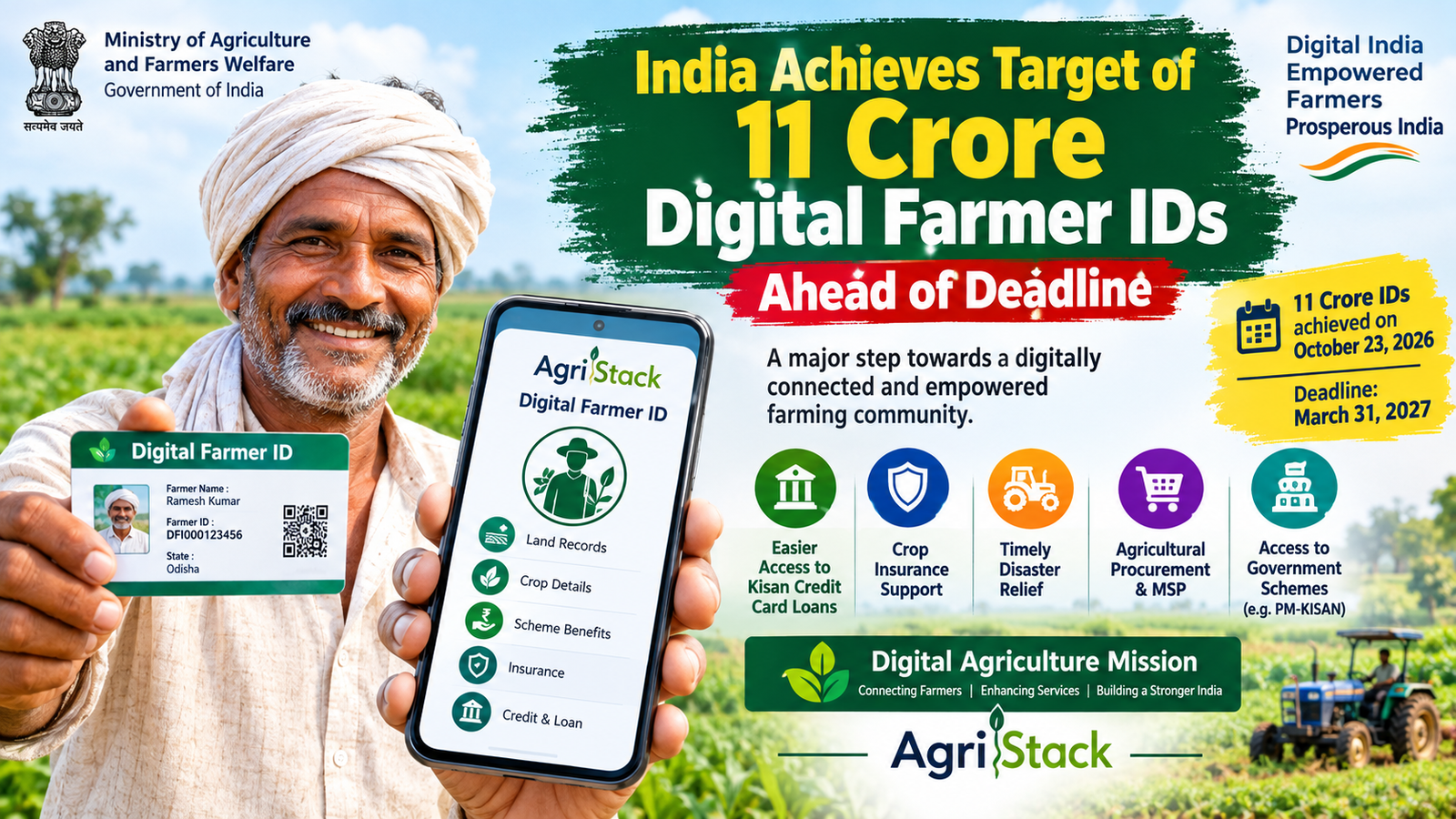
New Delhi, October 24: India has achieved the milestone of generating 11 crore unique digital Farmer IDs, five months ahead of the March 31, 2027 deadline, marking a significant step in the government's efforts to digitise agricultural services and improve the delivery of benefits to farmers.
The initiative is part of the Centre's Digital Agriculture Mission and is being implemented through the AgriStack framework. The digital Farmer ID system aims to create a reliable database of farmers by linking their identity with relevant agricultural records, including landholdings and crop-related information.
Union Agriculture Minister Shivraj Singh Chouhan has been associated with the government's push to expand digital infrastructure in the agriculture sector. The achievement is expected to support more efficient delivery of agricultural schemes and help government agencies identify eligible beneficiaries more accurately.
The Farmer ID is designed to provide farmers with a unique digital identity that can be used to access a range of agricultural services. By improving the availability and verification of records, the system is intended to reduce paperwork, simplify administrative procedures and make government services more accessible.
One of the key expected benefits is easier access to agricultural credit. Digital records may help streamline the process of accessing Kisan Credit Card facilities and other eligible loan services, subject to the applicable requirements of banks and financial institutions.
The initiative is also expected to support crop insurance enrolment, agricultural procurement and the delivery of disaster relief. Better access to verified farmer information could help authorities identify eligible beneficiaries and process assistance more efficiently during droughts, floods and other natural calamities.
Digital Farmer IDs may also contribute to the implementation of schemes such as PM-KISAN by improving the verification of farmer records. However, possession of a Farmer ID does not automatically guarantee eligibility for every government scheme, as individual programmes continue to follow their respective rules.
The AgriStack framework seeks to build digital infrastructure for agriculture by bringing together relevant information on farmers, land and crops. The government expects these digital records to improve transparency, support evidence-based policymaking and reduce duplication in the delivery of public services.
Despite the progress, effective implementation will depend on accurate records, timely corrections and accessible registration facilities. Farmers whose land or personal details contain errors may require assistance to update their information. Awareness campaigns and support at the local level will therefore remain important, particularly for small and marginal farmers and those with limited digital access.
Data protection and responsible use of personal information will also be important as the digital database expands. Authorities will need to ensure that farmers can verify their records and seek corrections through appropriate channels.
Achieving the 11-crore target ahead of schedule represents an important milestone in agricultural digitisation. The next challenge will be to ensure that the digital identity system translates into practical benefits for farmers across the country, including easier access to services, timely assistance and more efficient delivery of government support.
*AI Generated
Powered by Froala Editor